
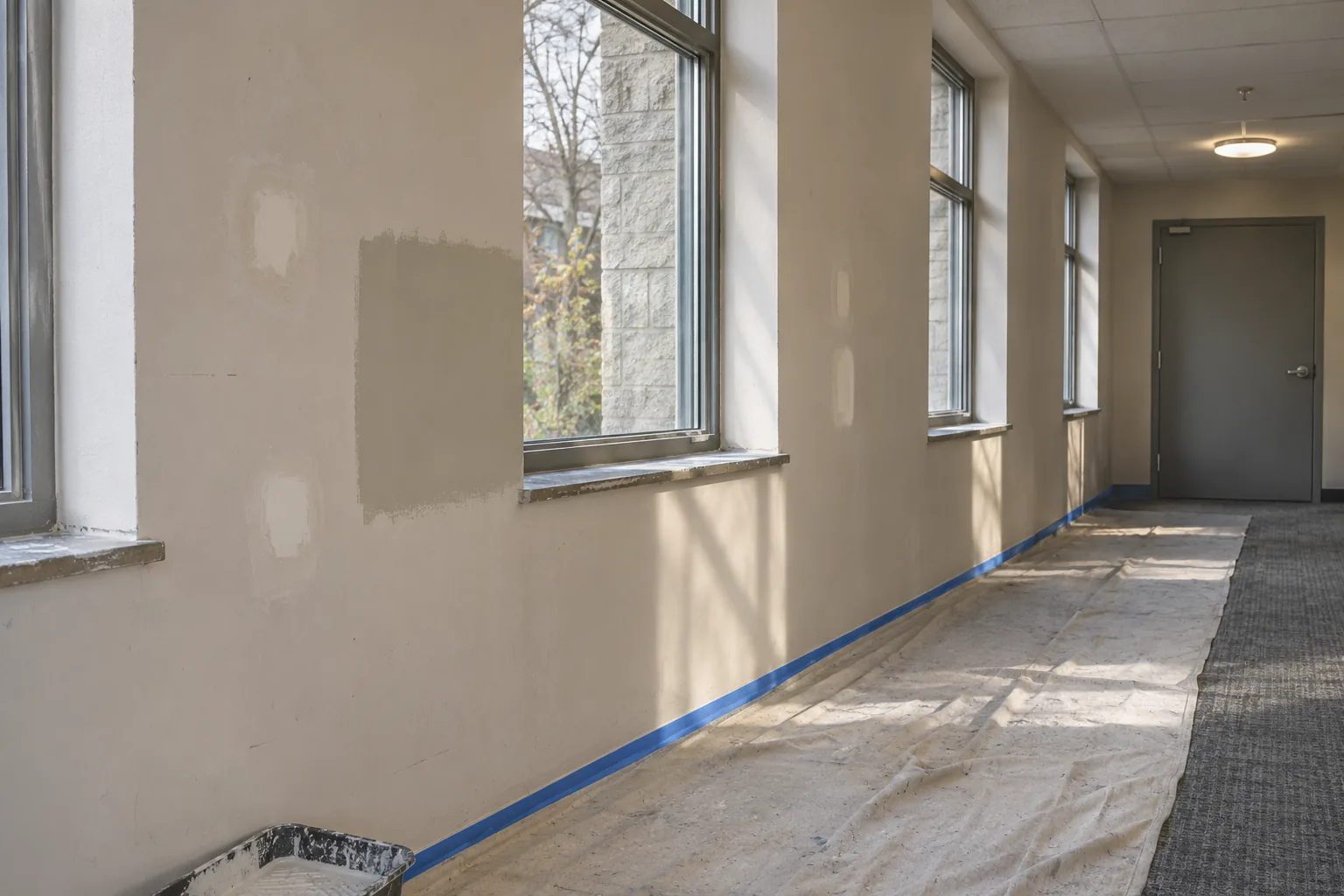
The corridor paint may feel dry on Monday morning and still pick up a scuff from the first cart that passes. On a commercial repaint, surface prep and the time before the space goes back into use matter as much as the colour. Start with the wall that wears out first.
Survey the surfaces room by room
Walk the space in daylight and under its usual lighting. Look for scuffs, old holes, peeling paint and stains. Record the substrate, such as drywall, concrete or metal, and where it takes the most abuse. A recurring stain is a reason to check the cause before covering it.
On the walkthrough, point out the repairs you want included. A corridor with years of touch-ups needs different prep from a new wall. Ask which surfaces will be cleaned, repaired or primed and how floors, hardware and signs will be protected. Sherwin-Williams surface preparation guidance
Test the finish where you will see it
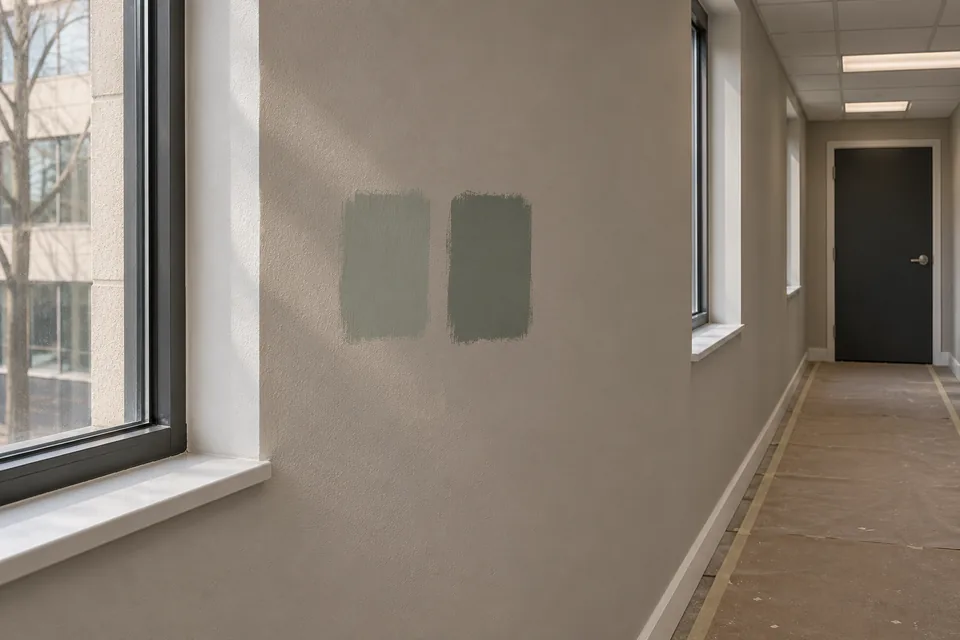
Have a sample applied on a representative wall near a window or under the fixtures that will stay. Look at it from the entrance and next to finishes you are keeping. For a corridor that gets washed often, explain how and how frequently it is cleaned so the coating can be selected for that use.
Ask when the paint can be recoated, used and cleaned
Ask how long to wait before a second coat, reopening the space and the first wash. Each milestone serves a different purpose. Confirm the timing for the product and the actual site conditions. A coating that feels dry can still be vulnerable to rubbing or cleaning. Benjamin Moore guidance on freshly painted surfaces
Book the work windows that require clearing a corridor or entrance first. Agree on access, ventilation and reopening times with the building manager. At handover, keep a room-by-room record of colours, finishes and products for future touch-ups.
Before the walkthrough, gather photos, a room list and the hours when each area can be cleared. See Ozar’s building painting services and tips for construction in occupied spaces.